Memory chip stocks just had one of their roughest weeks in months. Over five trading days, SK Hynix fell 26%. Samsung dropped 22%. Micron slid about 11%.
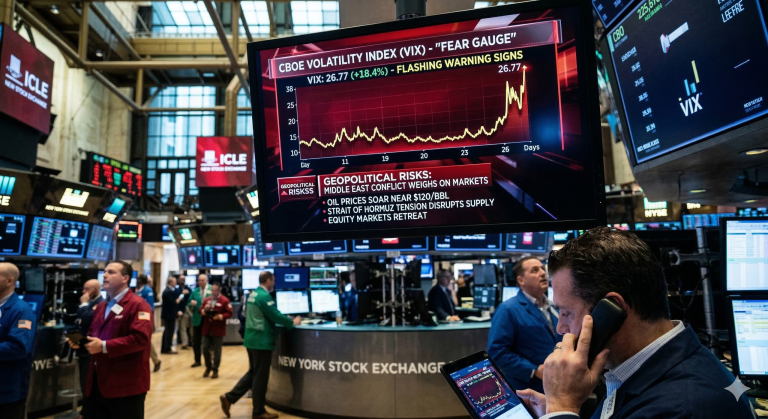
The selling came as global equity markets turned shaky and AI names lost momentum. Two specific fears hit memory makers hardest. The first is a new threat from China. The second is talk that the market could swing into oversupply before the decade is out.
Neither fear is settled. But together they raise a big question for investors. Is the memory boom built to last this time?
The China Factor
The trouble started early in the week. ChangXin Memory Technologies, known as CXMT, is China’s top memory maker. It announced plans for a server memory product built on a new architecture.
The design promises higher storage density. That stirred fears CXMT could start winning global share from Samsung, SK Hynix and Micron.
Many analysts are not convinced yet. Their main doubt is manufacturing yield. Ben Barringer of Quilter Cheviot told CNBC that a new architecture is only as good as the share of working chips it produces. At a 50% yield, he noted, half the output ends up in the bin.
Kevin Cassidy of Rosenblatt Securities was equally calm. He told CNBC he doesn’t expect CXMT’s news to “swing the supply-demand equation at all.”
A Warning About 2029
The second worry came from South Korea. An opinion column in Maeil Business Newspaper urged the government to plan for a cooling AI boom. It also called for a search for the country’s next growth engine.
The writer cited two industry voices. One was Professor Hwang of Seoul National University. The other was Ahn Ki-hyun of the Korea Semiconductor Industry Association. Both reportedly expect a wave of new supply to make memory a crowded, cutthroat market by 2029. The column suggested the supercycle could end by 2030.
Elon Musk added fuel on X. He wrote that China will be producing a lot of RAM in 2028.
Oversupply would mean lower prices and thinner margins. Still, few other analysts have echoed a forecast that far out.
Why This Cycle Might Be Different
Memory has always been a boom and bust business. Prices soar when demand beats supply. Then makers add capacity, supply catches up, and prices crash.
AI has changed the demand picture. Phones and laptops used to be the biggest buyers. Now memory is a core part of Nvidia chips and data center hardware. That shift tightened supply and sent prices to record highs. Samsung, SK Hynix and Micron all rallied hard as a result.
Every major maker is adding capacity. But a new fab takes roughly three to five years to build. That is why many analysts don’t see the shortage easing until 2028.
Even then, a price collapse is not a given. Counterpoint Research expects DRAM prices to fall about 23% in 2028 versus 2027. Yet prices would still sit around 230% above 2025 levels.
Counterpoint’s Jeongku Choi calls this a “New Normal” for memory. Buyers and suppliers now sign long-term deals of three to five years. These deals include big upfront payments and set price floors and ceilings. In his view, that should soften any future downturn.
The Bottom Line
This week’s drop reflects fear more than hard data. CXMT’s design is unproven at scale. The 2029 glut call comes from a single column. And long-term contracts may cushion the next downturn.
That said, memory stocks have run a long way on the AI story. Any hint that the cycle still exists can trigger sharp selling.
Investors should keep an eye on a few signals. Watch for proof that CXMT can hit solid yields. Track capacity plans from the big three makers. And follow DRAM contract pricing heading into 2027 and 2028.
Source material via CNBC. This post is for information only and is not investment advice.